Independence Acrylic Roof Coating
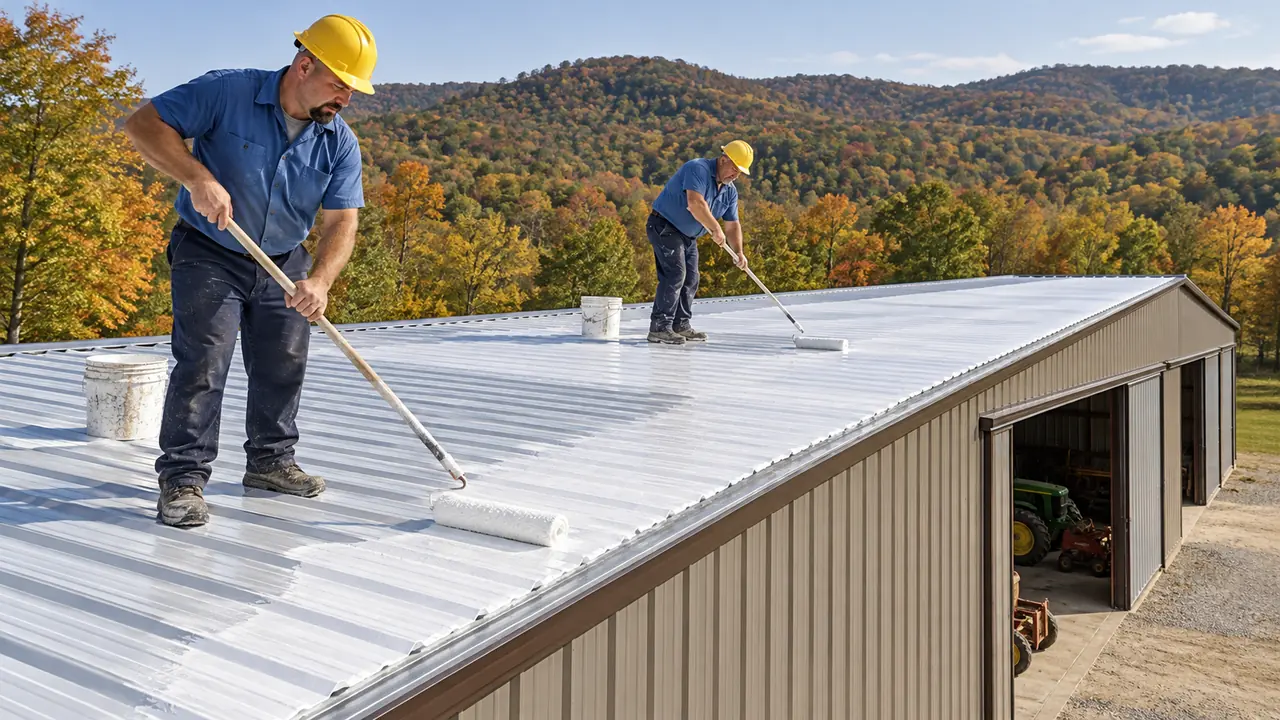
Acrylic roof coating in Independence for sloped metal roofs that shed water fast, applied on warm, dry days over washed and primed steel.
Quick Facts
- Applied on warm, dry days
- Washed and degreased first
- Rust primed before topcoat
- Easy to recoat later
Is This Roof A Fit?
Acrylic fits roofs with enough pitch that water leaves within hours. The cure window matters as much as the roof.
Acrylic Over Primer
Prep, Then Coat
Silicone Instead
Acrylic stays cleaner than silicone over time, which helps a white roof keep reflecting heat.
What We Check On A Sloped Metal Roof
The six spots below decide how well acrylic bonds and how long it lasts.
Chalked Factory Paint
Faded paint leaves a powder that rubs off on your hand, and coatings will not grip it. Chalk is the main adhesion problem on older R-panel, so it gets washed off completely.
Screw Heads And Washers
Washers dried by sun leak at every purlin line. Screws get tightened or upsized, rusted heads primed, and each one capped with brush-grade sealant.
End Laps And Debris
Grit and leaves pile up at end laps on the lower slope. The laps get cleaned out, primed, and covered with fabric so acrylic bridges the joint.
Oil Near Exhaust Fans
Exhaust fans and diesel equipment leave an oily film that blocks adhesion. Degreaser cleans around the fan curb before the primer goes on.
Gutters That Back Up
Acrylic softens where water sits, so gutters get cleared and leveled to keep the eave from holding water against the coating.
Ridge Vent Closures
Torn closures at ridge vents let wind-driven rain in under the cap. They get replaced and sealed before the topcoat covers the ridge.
Commercial Roof Coating Options for Independence
Acrylic builds we install around Independence, from a simple recoat to a full system on bare steel.
| Option | Goes Over | Best For | Watch For |
|---|---|---|---|
| Primer + Two-Coat Acrylic | Washed, primed R-panel | Barns, sheds, and shops with slope | Two dry days for curing |
| Acrylic With Urethane Walkway | Primed metal with service paths | Feed mills and fan-heavy roofs | Odor near occupied offices |
| Acrylic Recoat | An existing acrylic roof | Renewing a worn acrylic surface | Cleaning and adhesion test first |
Benefits of Coating Your Roof
Why owners of sloped metal buildings pick acrylic.
Stays Cleaner Over Time
Less dirt sticks to acrylic than to silicone, so the white roof surface keeps more of its reflectivity on barns near gravel drives.
Simple Recoats Later
An acrylic roof accepts a wider range of recoat products, which keeps future maintenance on the panels simple.
Water-Based Application
Its water base carries less odor than urethane, a help when offices or a break room sit under the panels being coated.
Seals Every Screw Line
Brush-grade sealant on each screw head, then acrylic over the field, puts the washers under cover for years.
Planning Your Coating Before Fall?
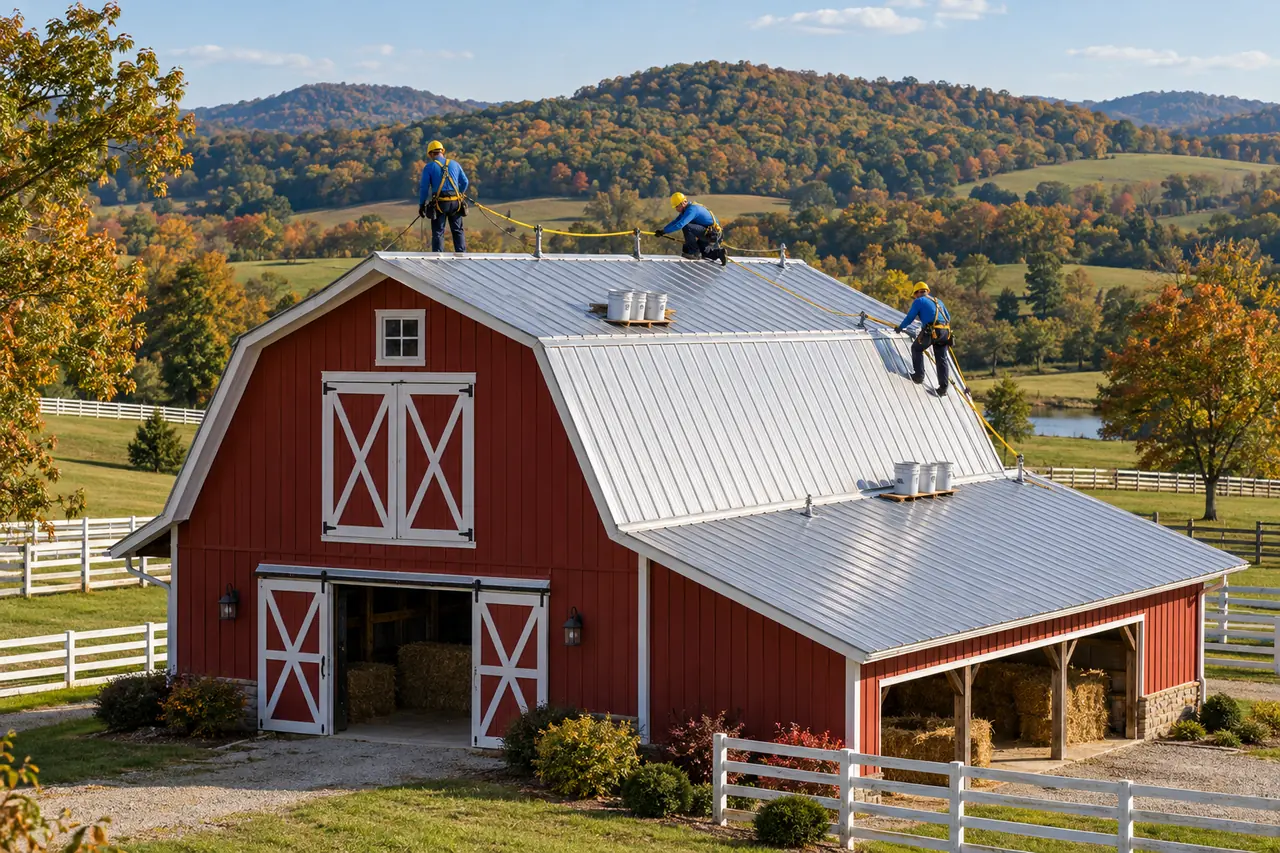
Acrylic needs warm, dry days to cure, and fall work wraps up before frost reaches the panels. Get a ballpark figure now so the schedule fits the weather.
How Acrylic Roof Coating Work Gets Done
The order we follow on a sloped metal roof getting an acrylic system.
Inspect Your Roof
We check panel pitch, rub-test the paint for chalk, look for oil near fans, and probe rust at end laps and eaves before choosing acrylic.
Pressure Wash And Degrease
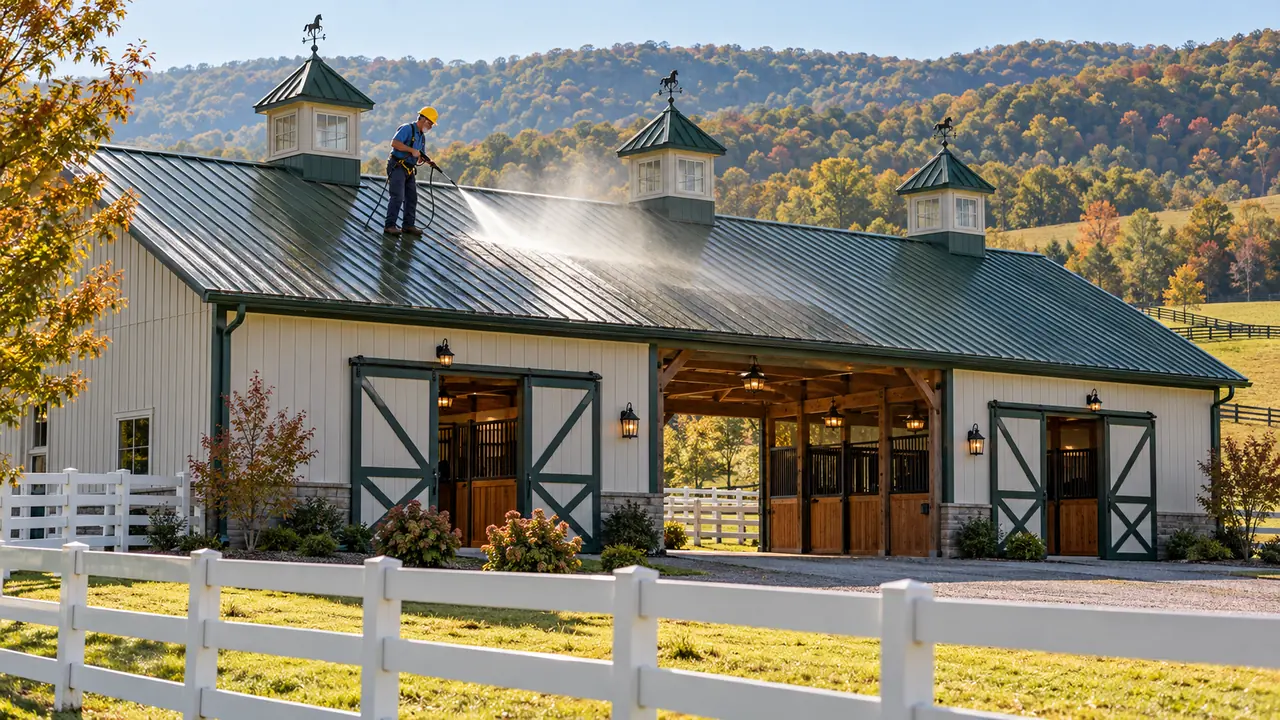
Washing removes dirt, pollen, mildew, and chalk; degreaser cuts oil near exhaust fans; a rinse clears cleaner residue from the panels.
Test Adhesion And Prime
Small test patches confirm the primer and acrylic grip the factory paint, then rust and bare steel get primer.
Seal Fasteners And Laps
Screws get tightened and capped; side laps, end laps, and ridge caps get fabric bedded in acrylic.
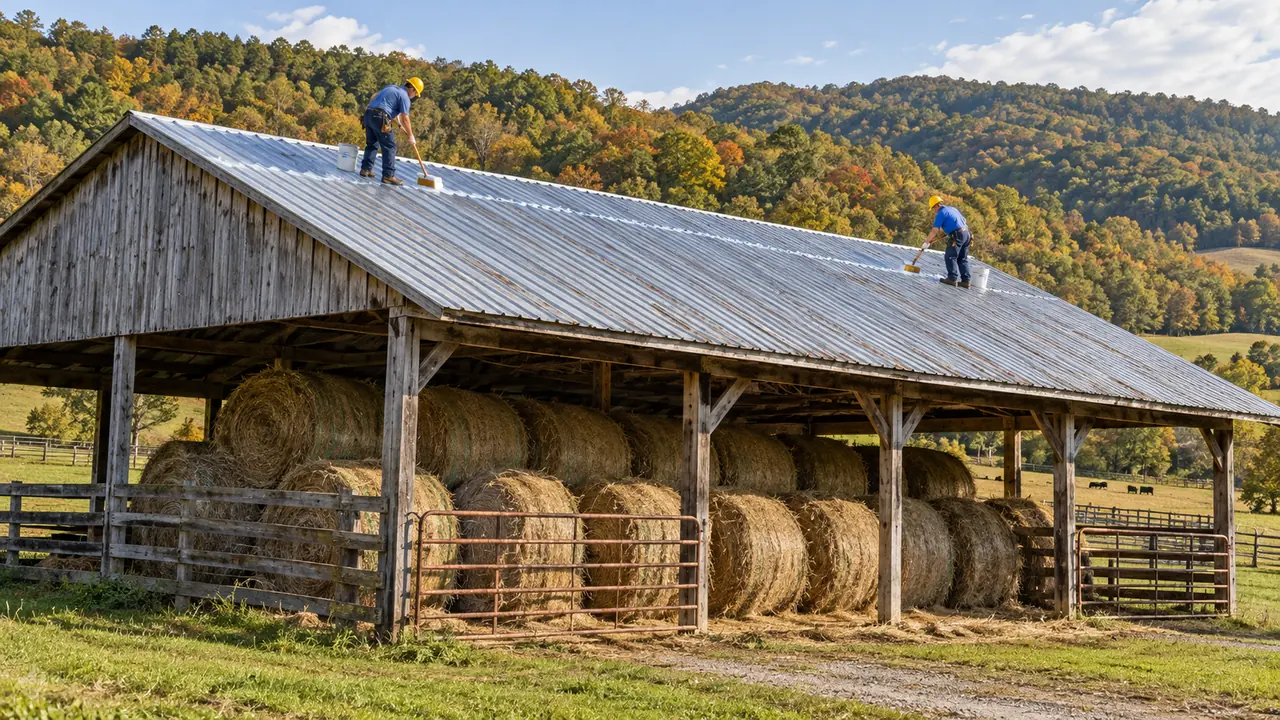
Topcoat On A Dry Day
Acrylic base and topcoats go down when panels are dry and warm, with a forecast check before each coat and mil readings as we go.
Related Roof Coating Services
Related systems for the same buildings.
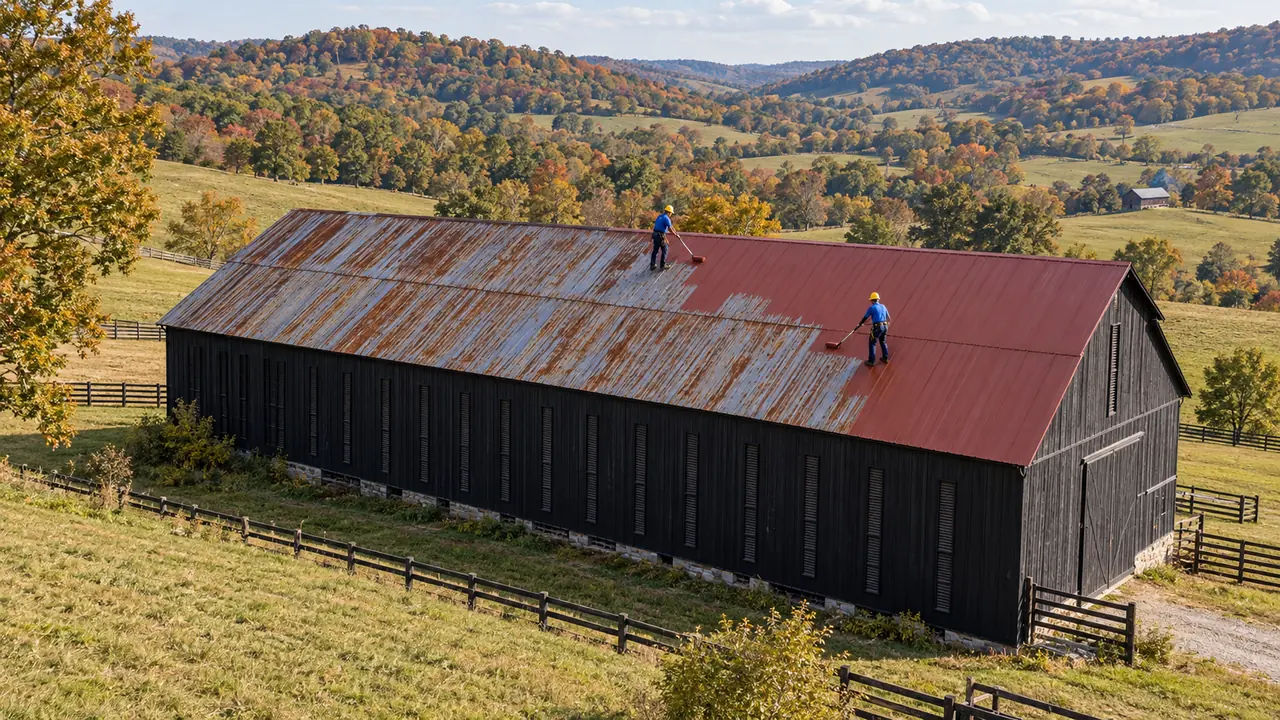
Metal Roof Coating
Our metal roof coating page covers the screw, rust, and lap repairs every acrylic job starts with.
Metal roof coating →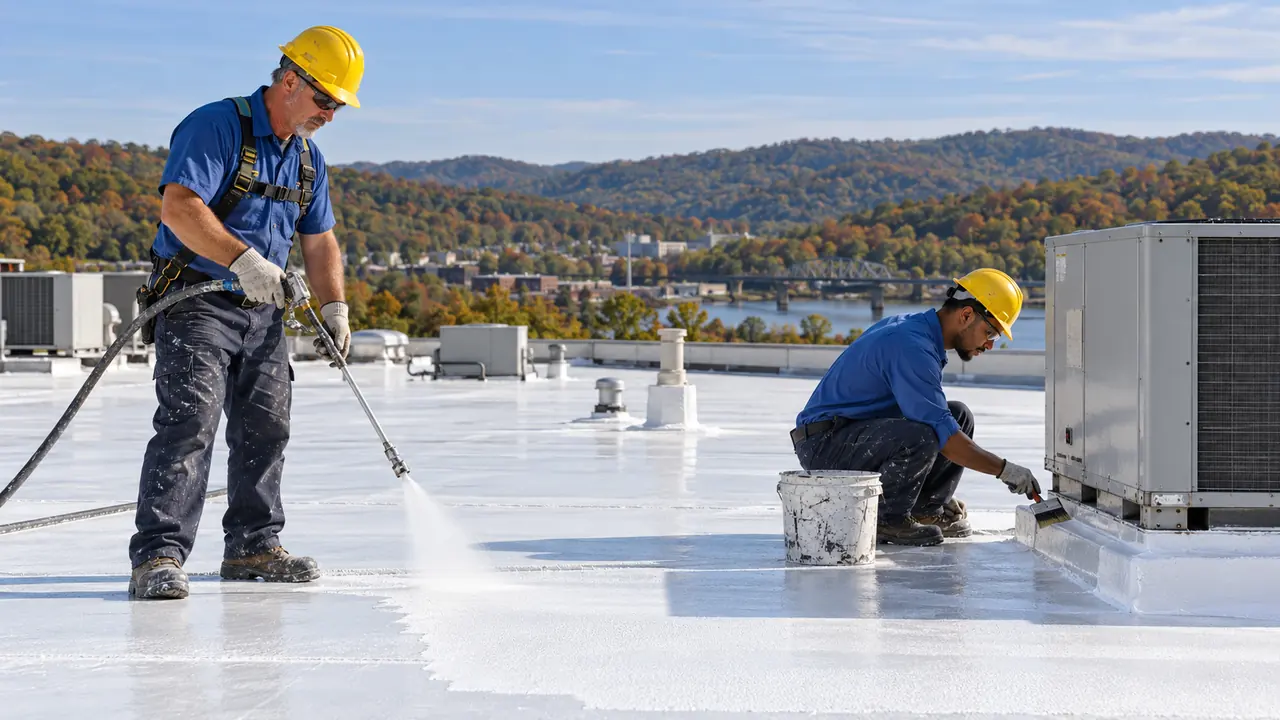
Silicone Roof Coating
If part of the roof holds water, silicone at those low spots keeps the coating from softening there.
Silicone roof coating →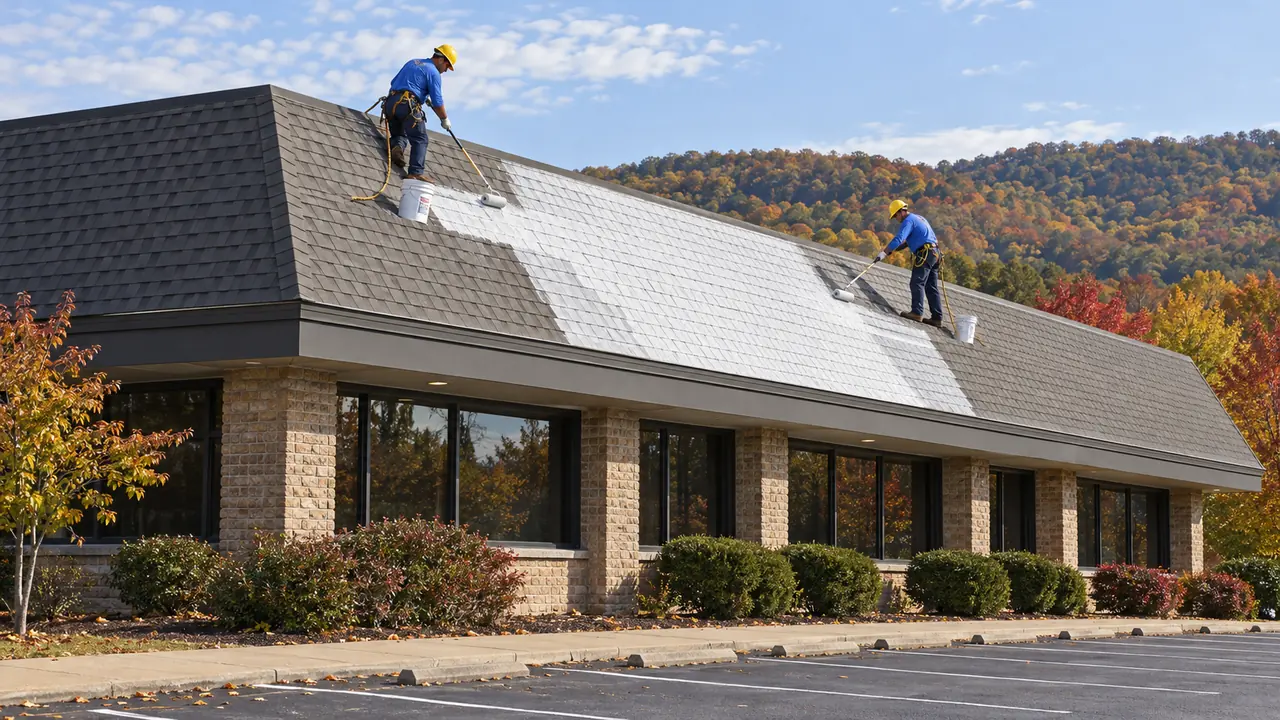
Shingle Roof Coating
Buildings with a shingle section beside the metal shop can have both roofs looked at in one visit.
Shingle roof coating →Independence Acrylic Roof Coating Questions
Are urethane coatings used on metal roofs?
Yes, often as a base coat or a walkway layer. Urethane resists abrasion, so it suits roof paths where workers service exhaust fans on a feed mill or equipment building. Some systems pair a urethane or epoxy primer with an acrylic topcoat. It smells stronger during application than water-based acrylic, so air intakes near offices get shut down first.
What time of year is best for coating a roof near Independence?
Late spring through early fall gives the steadiest weather, with dry days and panels warm enough to cure primer and acrylic. Morning dew delays starts until the metal dries, summer storms call for a forecast check before each coat, and fall work wraps up before frost. Every product label sets its own temperature and dew point limits.
Does a metal roof need to be pressure-washed before coating?
Every time. Coatings bond to clean steel and old paint, never to dirt, chalk, or loose rust, and chalk on faded paint is the biggest adhesion problem on older R-panel. Washing, degreasing near fans and diesel equipment, wire-wheeling loose scale, and rinsing come first, and small adhesion tests confirm the grip before the full roof is coated.
How many coats of acrylic go on a metal roof?
Usually a primer plus two coats of acrylic, a base and a topcoat, built to the thickness the product sheet specifies. Seams and screw heads get extra material underneath. The count matters less than the dry film thickness, which we measure with a gauge as each coat goes down.
Can acrylic go over a roof that was painted before?
Often, once the old paint passes an adhesion test. Loose or flaking paint gets scraped and washed off, chalk gets removed, and a small test patch shows whether primer and acrylic grip what is left. Paint from an unknown maker is where that test matters most.
Schedule Acrylic For The Dry Season
Get a ballpark figure online, or call us to set a roof walk before the warm weeks fill up.